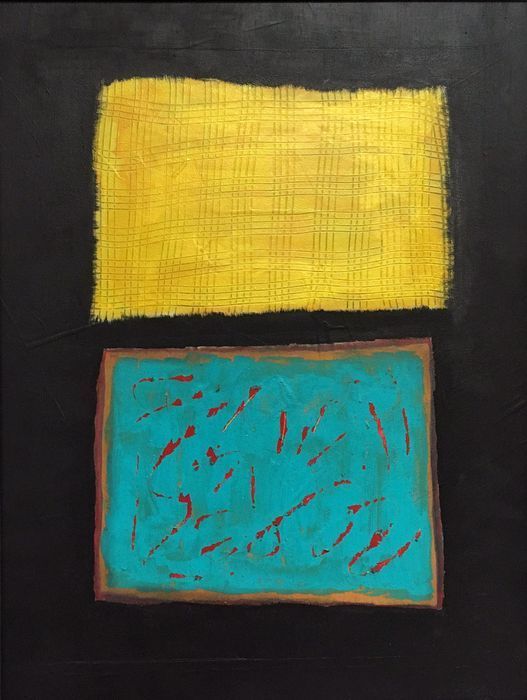
In Leaving Stockholm, color and texture do the work of memory. The composition is built around two stacked rectangular forms, each carrying its own emotional register. The upper field, rendered in a warm, tactile yellow, conveys light, structure, and a sense of held experience. Its crosshatched surface gives it a woven, almost architectural presence. Below it, a cooler turquoise block introduces a different mood altogether—more fluid, more unsettled—interrupted by sharp red marks that feel spontaneous, like coded gestures or fleeting impressions.
Set against a deep, dark ground, these two forms seem suspended in a space of reflection. The painting does not describe a literal place so much as the feeling of leaving one. Warmth remains above; below, something more restless and unresolved begins to take shape. That tension between stillness and motion, order and interruption, gives the work its quiet psychological pull.
The painting rewards close viewing, where surface, edge, and mark-making become part of its “quiet conversation.” It is a piece about transition, but without drama—measured, introspective, and deeply felt.