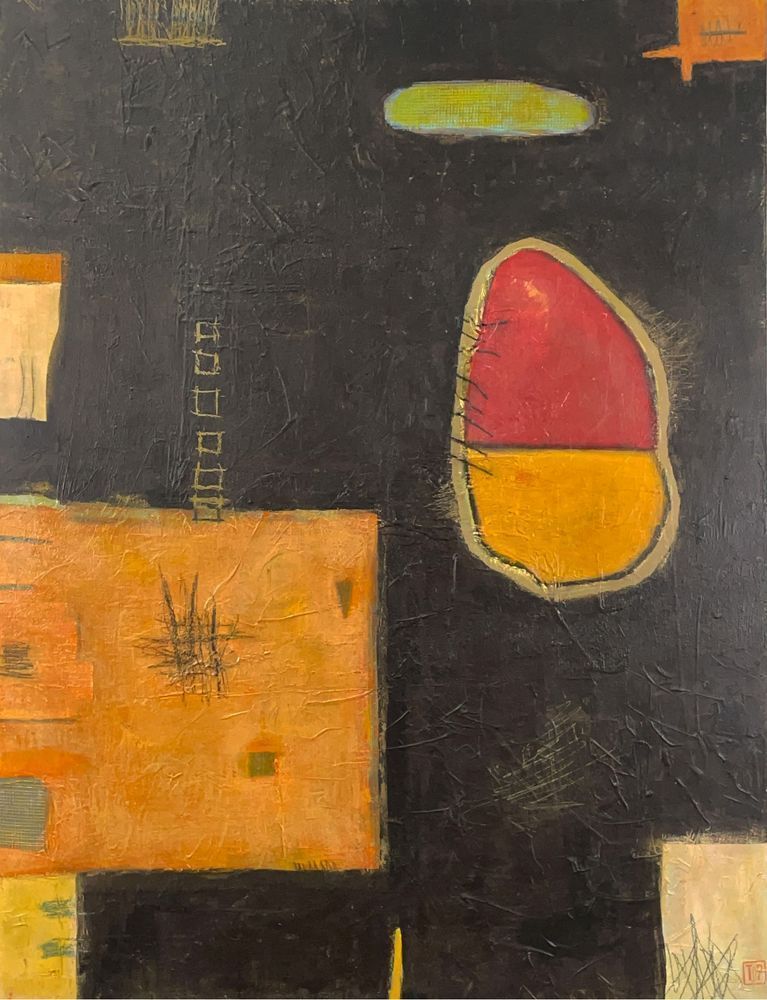
In A Night in Tunisia, a deep, textured field of black sets the stage for a composition that feels both grounded and enigmatic. Warm ochres, reds, and muted yellows emerge like fragments—suggesting structures, relics, or markings shaped by time and environment.
A central, shield-like form glows against the dark ground, bordered and divided as if it carries symbolic or architectural significance. Surrounding elements—linear marks, scratched passages, and geometric hints—evoke the visual language of excavation, mapping, or ancient design.
The painting draws on the atmosphere of North Africa—its layered histories, earthen architecture, and enduring sense of mystery. Rather than depicting a specific place, it channels the feeling of discovery, where traces of the past remain embedded in surface and form.
The title offers a nod to Dizzy Gillespie’s iconic jazz composition, borrowing its sense of intrigue and cultural resonance. Like the music, this reproduction moves between structure and improvisation, carrying both rhythm and depth beneath its surface.